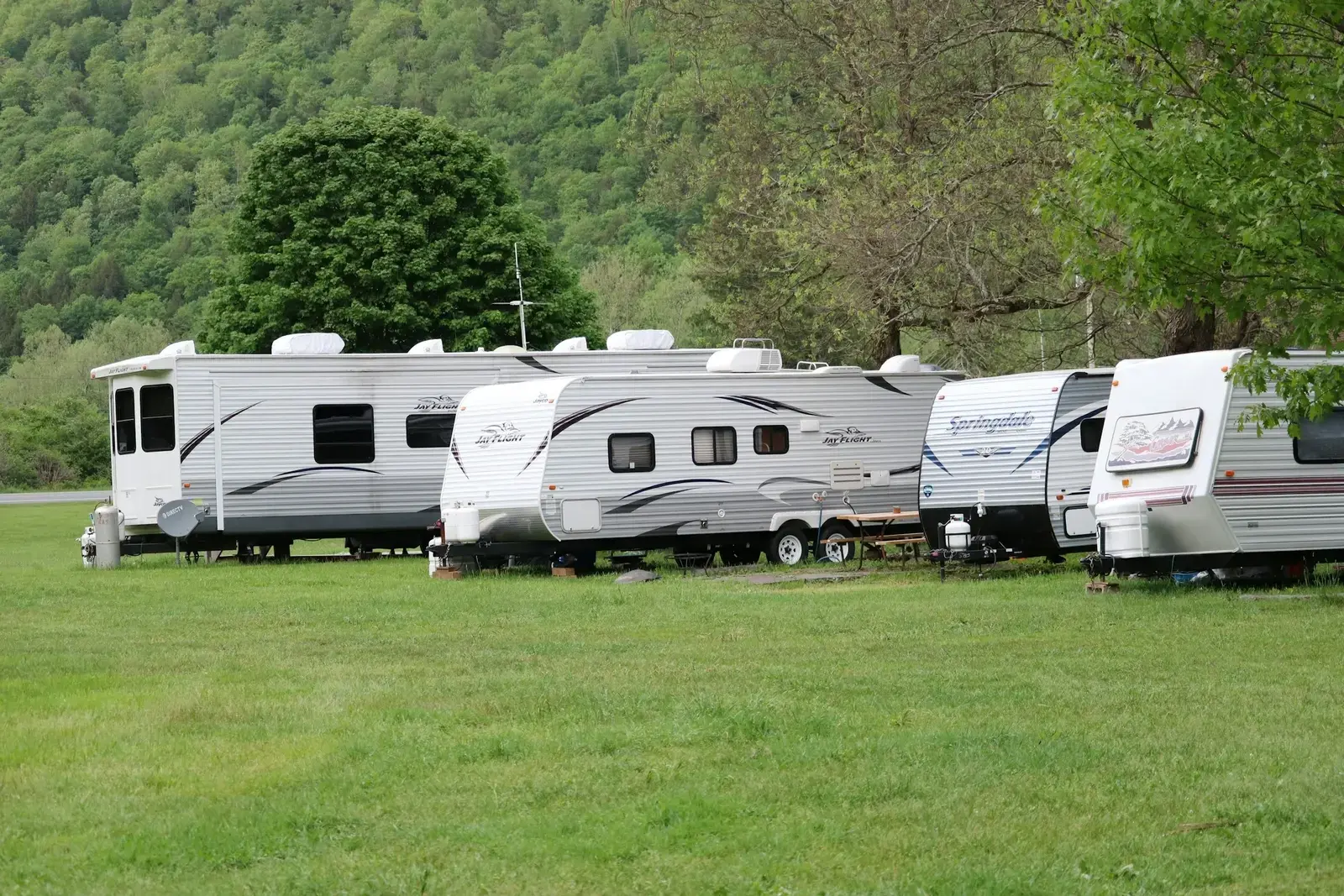
The bigger the trailer, the more comfortable the camping. This common belief pushes many buyers toward models that are too heavy for their vehicle and too long for wooded sites. To choose your mini-trailer wisely, the right approach is to start from how you’ll actually use it, then select the lightest format that meets those needs.
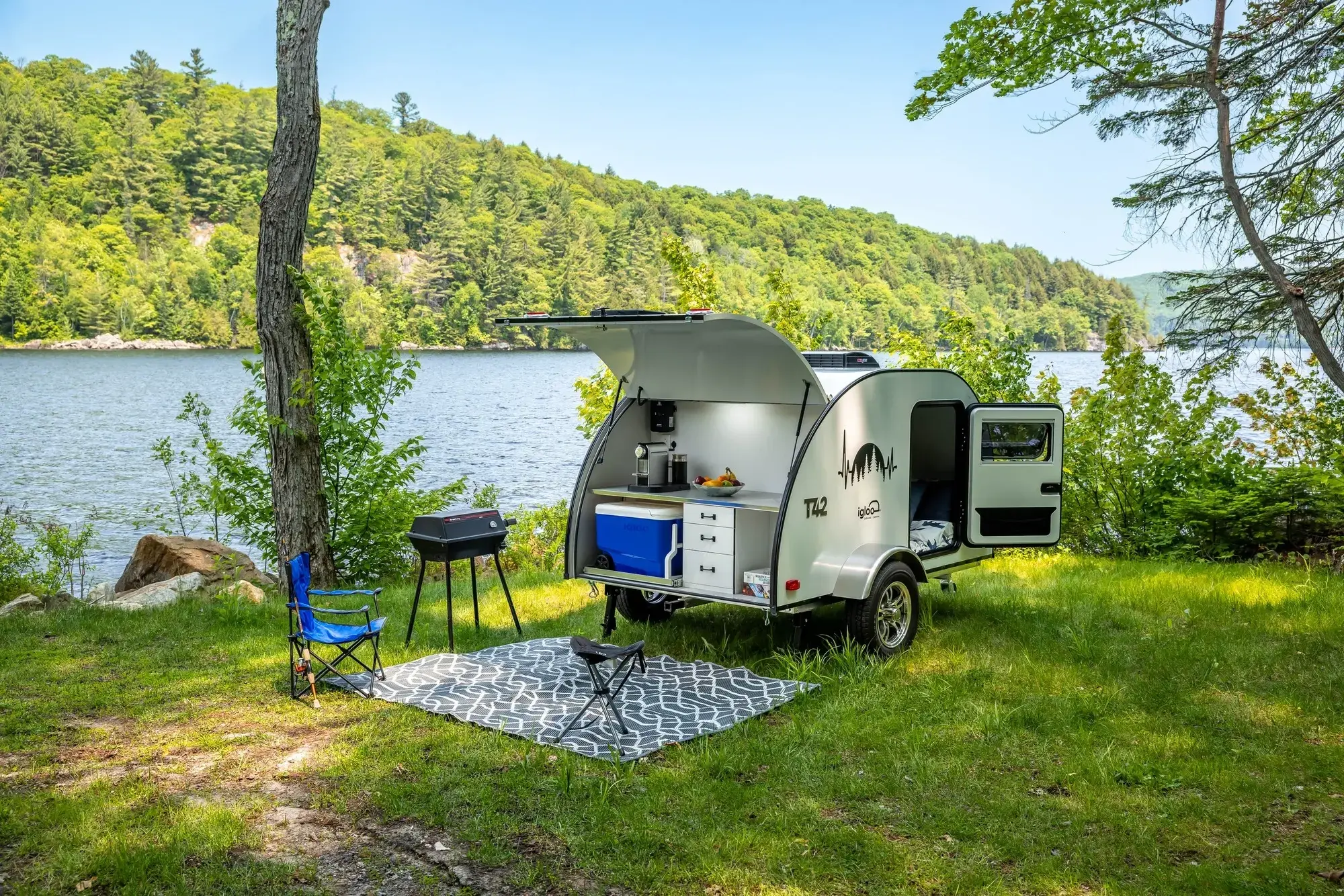
Coffee made under the hatch facing the lake, a double bed sheltered from the dew, a route chosen according to the weather: a compact format can offer all that for 220 to 405 kg, based on the two models mentioned below.
The following criteria are ranked in the order in which they rule out options: use, weight, construction, layout, power, then price.
Choosing your mini-trailer based on how you camp
Solo, couple or small family
The number of sleepers determines the bed width and storage space you need. A mattress of about 56 by 76 inches, the equivalent of a double bed, suits two adults. For a family with a young child, some manufacturers offer an optional extra bed.
Weekends or longer stays
For getaways of two or three nights, a format where you sleep inside and cook outside is plenty. For stays of a week or more, being able to eat under cover, get changed standing up and store more becomes important, especially in rainy weather.
Seasons of use
In Quebec, May and October nights often drop below 5 °C. A trailer insulated in the floor, walls and roof extends the season into spring and fall. Without insulation, condensation and cold walls quickly cut short any stay outside summer. Yet it’s often in the fall, when the maples turn red and campgrounds empty out, that many travellers prefer to go.
Checking the weight and the tow vehicle
Look up the towing capacity in your vehicle’s owner’s manual, then add everything you’ll carry to the trailer’s dry weight.
The Highway Safety Code requires brakes on each load-bearing wheel of the trailer when its loaded mass reaches 1,300 kg, or when it exceeds half the net mass of the vehicle towing it, as explained in the École nationale de police du Québec quick-reference guide.
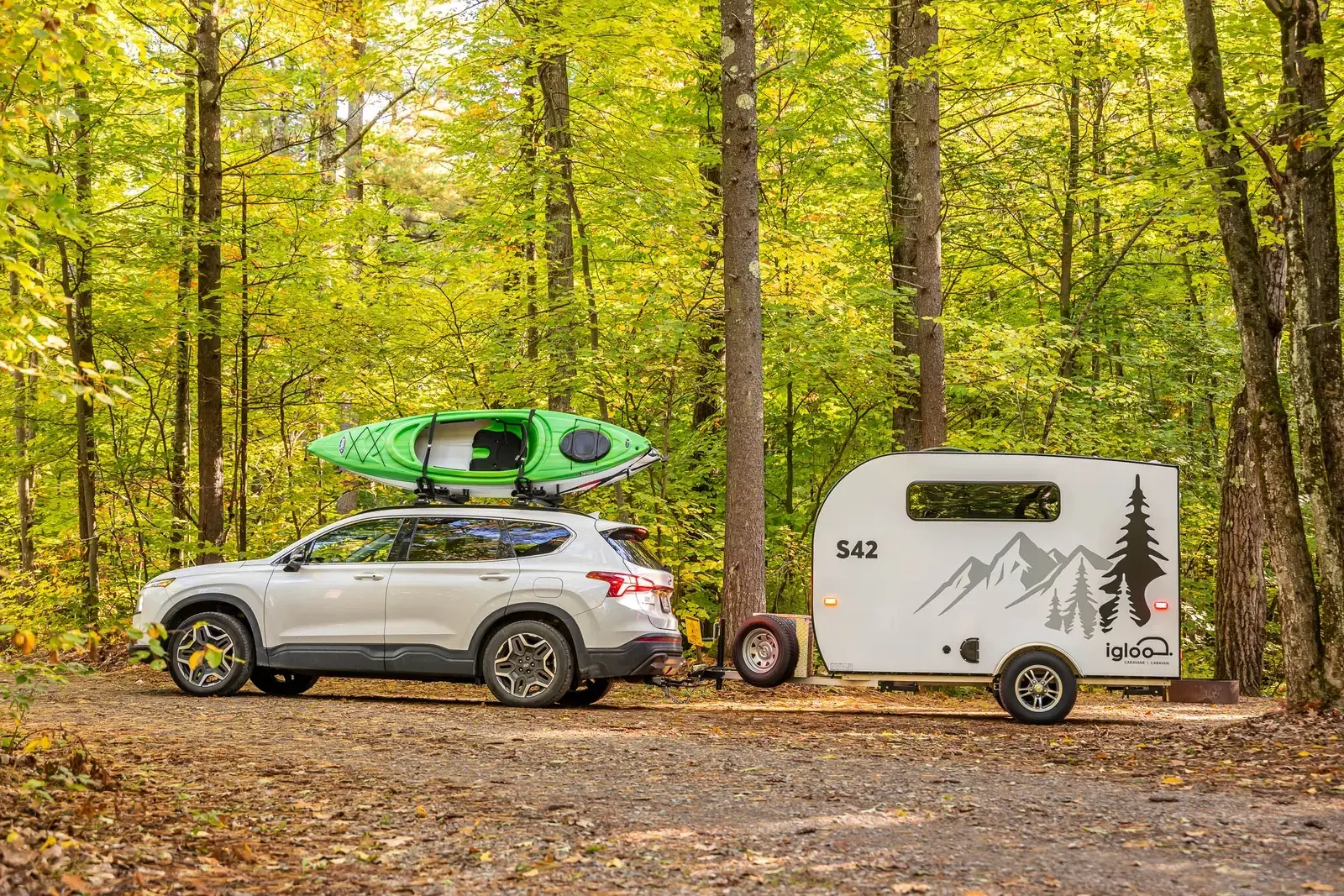
An ultralight mini-trailer generally stays under these thresholds, which means no electric brakes on the trailer and no brake controller in the vehicle.
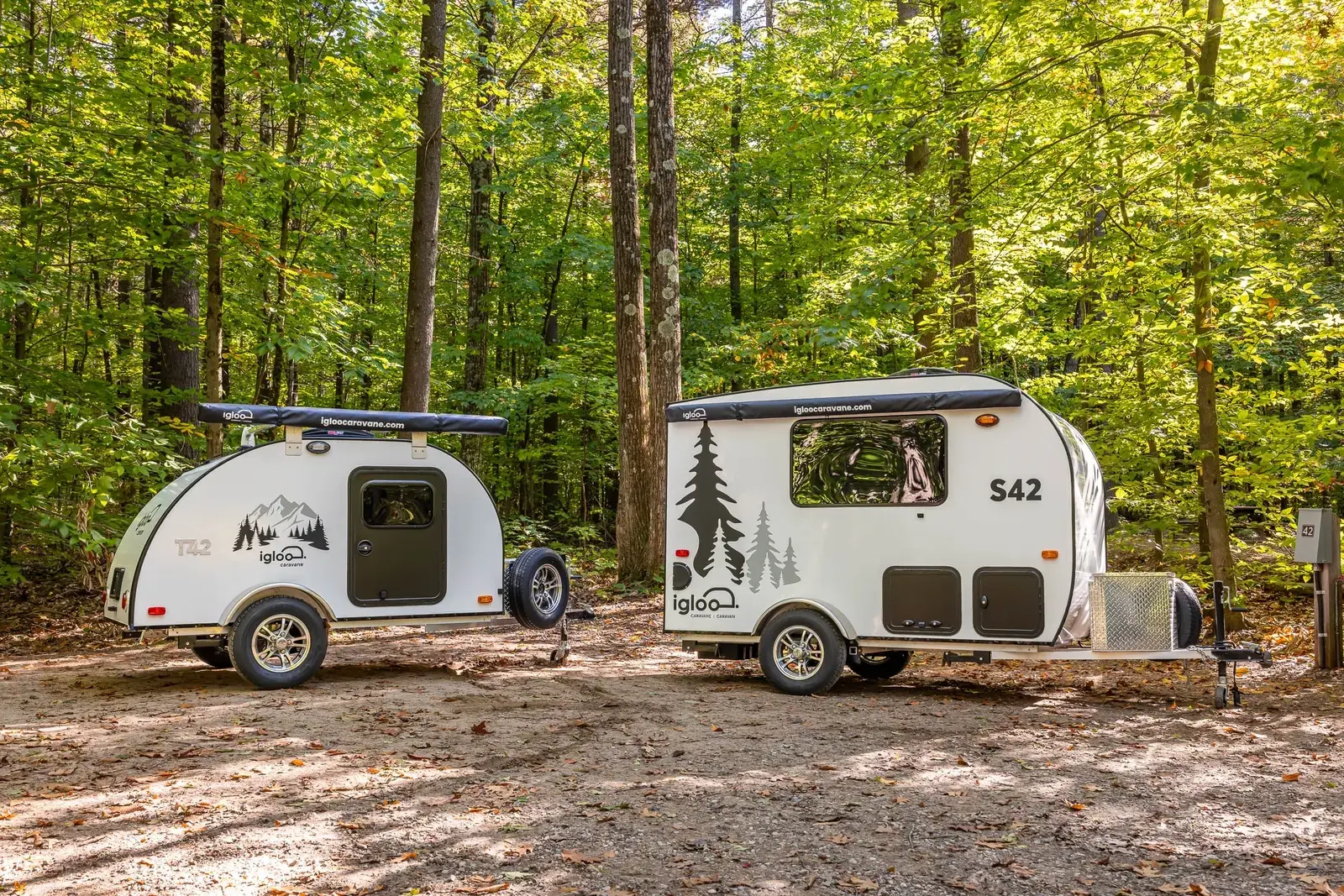
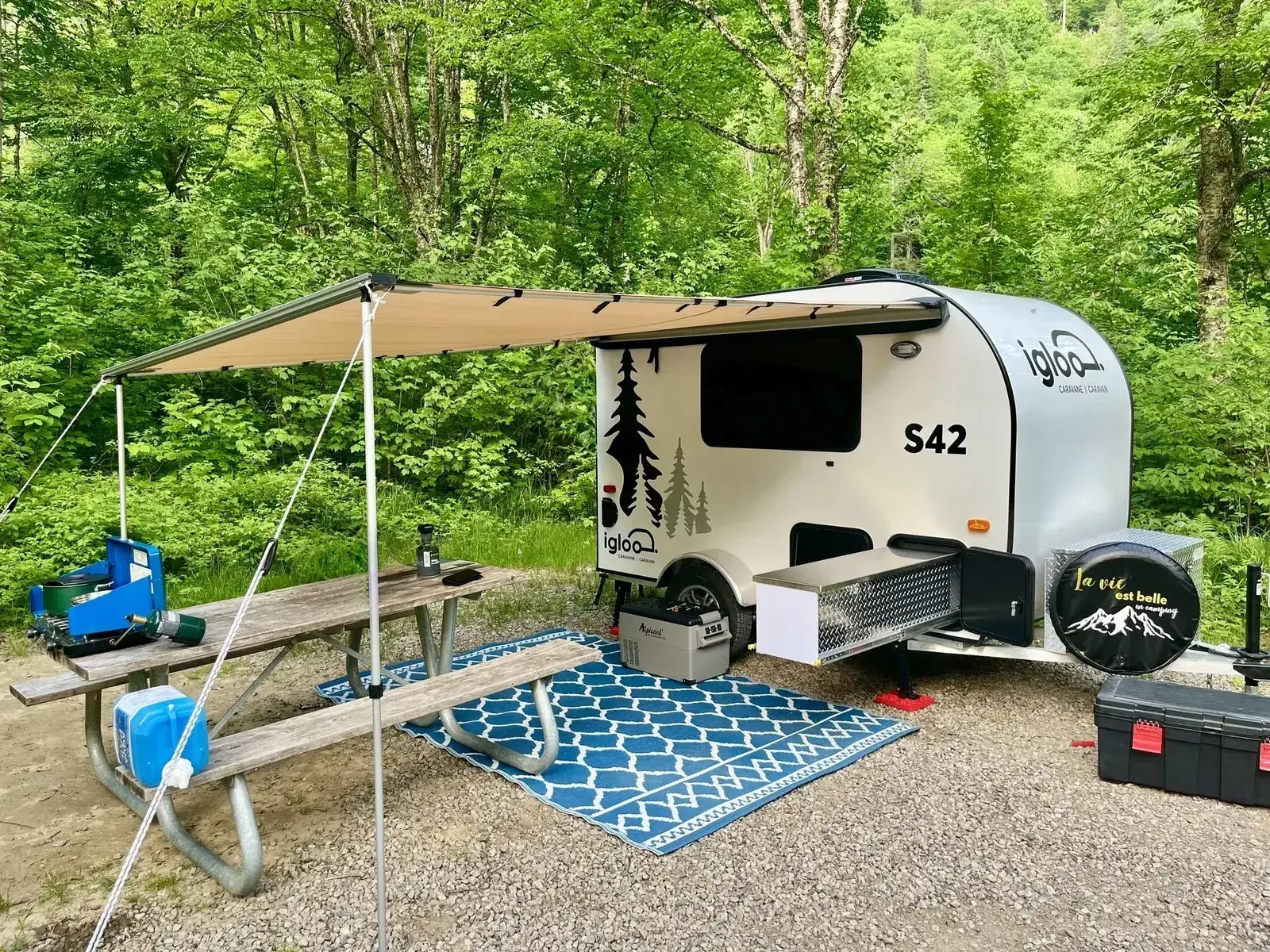
The T42 mini-trailer, for example, has a net weight of 485 lb (220 kg), while the taller S42 mini-trailer weighs 885 lb (405 kg).
Construction and materials that make a mini-trailer last
Three elements determine a trailer’s lifespan: the frame, the walls and whether there’s wood in the structure. Ask the seller what each one is made of.
The frame
An aluminum frame doesn’t rust and lightens the whole trailer. A steel frame of the same size weighs more and must be protected against corrosion from road salt.
Walls and insulation
Walls made of fibreglass-reinforced polymer (FRP) panels resist impacts and UV rays, with no paint or varnish to maintain. High-density polystyrene in the floor, walls and roof forms a continuous envelope that limits thermal bridges, meaning the areas where cold passes through the wall more easily.
Wood or rot-proof materials
Many classic trailers still have wood in their structure. A poorly detected water leak can rot it from the inside for years before it becomes visible. A rot-proof, wood-free structure eliminates that risk.
Interior layout and outdoor kitchen
Mini-trailers fall into two families: the teardrop, where you sleep inside and cook outside, and the stand-up format, where you can stand inside. The table compares one model from each family, both built in Quebec.
| Criterion | Teardrop format (example: T42) | Stand-up format (example: S42) |
|---|---|---|
| Net weight | 485 lb (220 kg) | 885 lb (405 kg) |
| Interior height | 47 in, seated | 68 in, standing |
| Overall height | 69 in | 92 in |
| Kitchen | 56 x 23 in counter under the hatch | 48 x 14 in stainless steel counter, slide-out |
| Meals under cover | No | Yes, table and convertible benches |
| Advertised starting price | $15,495 | $27,995 |
The teardrop format
The teardrop devotes all its interior space to sleeping. The kitchen is at the back, under a hatch that also provides shelter from light rain. It’s the lightest and most affordable choice, the one for getaways decided on Thursday for a Friday departure.
The stand-up format
The stand-up mini-trailer adds a door, windows and the ability to stand up. The benches convert into a bed and a table lets you eat inside. The weight goes up, but remains well below that of a traditional trailer.
Want to compare the two formats up close before deciding? Book a visit or ask the team your questions.
Electrical autonomy and useful mini-trailer options
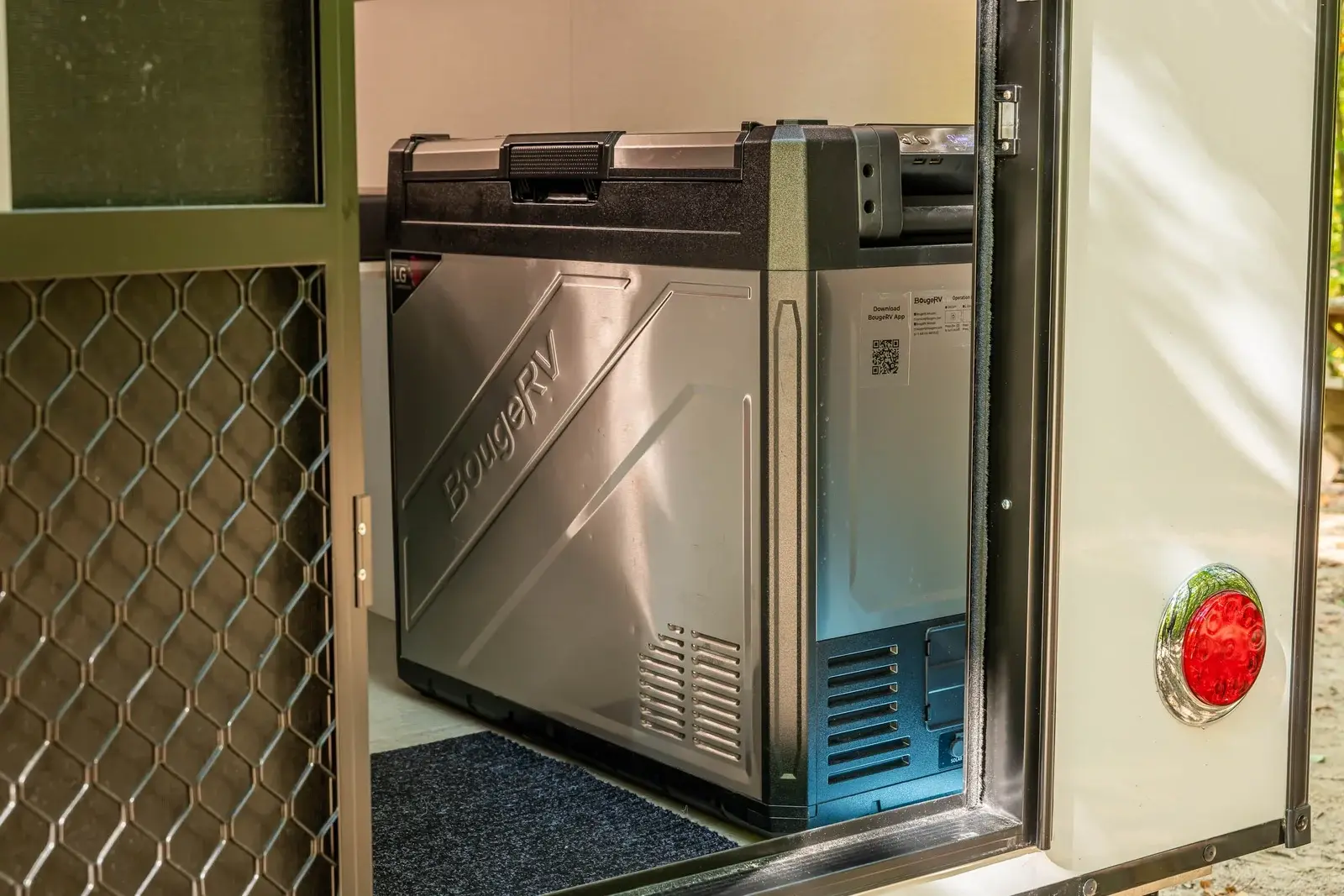
A 30 Ah lithium battery, standard on both models mentioned, powers the LED lighting, the roof fan and the charging of mobile devices. For an electric cooler or several days without hookups, a 100 Ah battery, a solar panel or a 600 W power station takes over.
Other useful mini-trailer options relate to comfort and storage: a 6 ft 6 in by 8 ft awning, a front storage box, a roof rack, a cooler drawer or a bike rack. The Customization page presents about twenty factory-installed options, including a child’s bed, a 2,000 W generator and a receiver tube for a bike rack.
Mini-trailer prices and what they include
The price of a mini-trailer varies with the format, materials and level of equipment. As a benchmark, the two models presented above are listed from $15,495 for the teardrop and from $27,995 for the stand-up format, before options and taxes.
Before signing, ask the seller these questions:
- Is the advertised weight dry or with standard equipment?
- Which options are included, and which are added to the starting price?
- Where is after-sales service provided, and how long does it take to get parts?
- Is the manufacturer or an authorized dealer located in your region?
Buying a model built in Quebec often makes these answers simpler: parts and service are nearby, and you can visit the workshop. The manufacturer’s blog covers this in Why choose a teardrop trailer made in Quebec?
Also plan for a bit of practice. According to CAA-Québec’s short guide to driving with a trailer, about four hours of lessons are enough to master the basics, and a vehicle towing a trailer takes longer to stop.
Where to start when choosing your mini-trailer this season
Start with a short list: the number of sleepers, the usual length of your stays and the months you plan to camp. Add your vehicle’s towing capacity. These four figures are enough to rule out most models and choose your mini-trailer on solid ground.
Then compare construction, insulation and the real price with the options that matter to you. An in-person visit is still the best way to judge interior height, mattress comfort and how easily the hatch opens. Picture yourself spending a rainy night in it in the Gaspé: the right model is the one that makes that moment enjoyable.
Once your list is ready, a conversation with an advisor can confirm your choices in a few minutes. Get advice on your future mini-trailer.
Frequently asked questions
What criteria should you look at to choose your mini-trailer?
To choose your mini-trailer, first compare its loaded weight with your vehicle’s listed towing capacity. Then assess the number of sleeping spots, the interior height, the insulation and the type of kitchen. Also check the structural materials, whether there’s any wood, the electrical autonomy, the options available, the after-sales service and the real price once options are added.
How much does a mini-trailer cost in Quebec?
The price varies with the format and equipment. For example, the T42, a teardrop-style mini-trailer built in Quebec, is listed from $15,495, while the S42, which you can stand up in, starts at $27,995. Options like the solar panel, the 100 Ah battery or the awning are added to that amount, as are applicable taxes.
Is an insulated mini-trailer useful in spring and fall?
Yes, a mini-trailer insulated in the floor, walls and roof keeps a more stable temperature when the nights turn cool. Insulation also reduces condensation on the interior walls when you wake up. In Quebec, where May and October nights drop below 5 °C, this criterion lets you start the season earlier and end it later, with a space heater.