An ultralight mini-trailer is a camping trailer light enough to be towed by an everyday vehicle, usually a few hundred kilos empty. It combines a bed, a kitchen and electricity in a compact format, without a bathroom or grey water tanks.
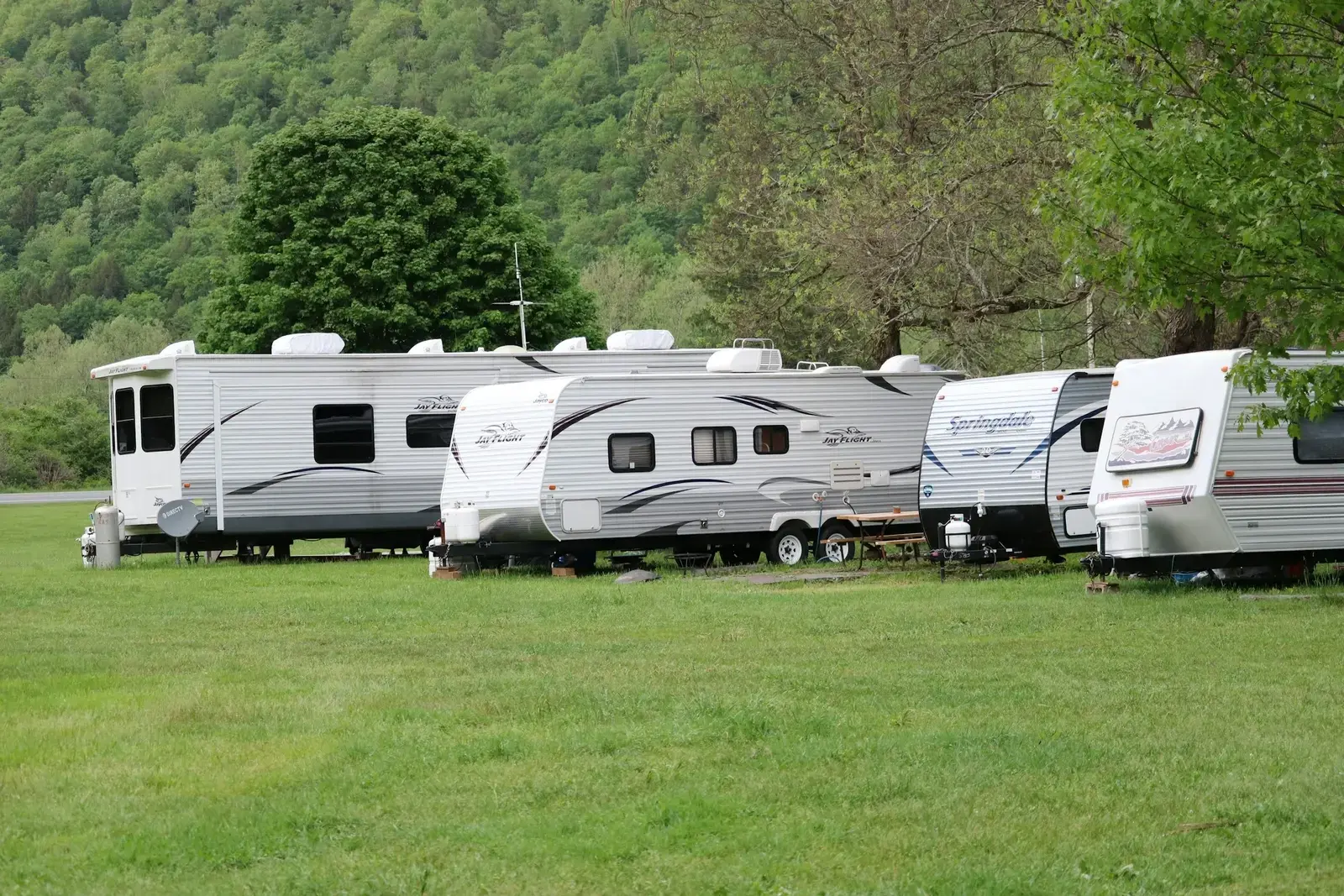
The traditional trailer, for its part, focuses on space: a closed bedroom, a bathroom, an indoor kitchen and a dining area. That comfort comes at a price in weight, tow vehicle and maintenance. The mini-trailer focuses on freedom: leave on a whim, sleep by a lake and head off again the next day without planning an expedition. The five advantages that follow cover the tow vehicle, regulations, maintenance, storage and access to campsites.
What sets an ultralight mini-trailer apart from a traditional trailer
The table sums up the main differences, using two models built in Quebec as examples of mini-trailers.
| Criterion | Ultralight mini-trailer | Traditional trailer |
|---|---|---|
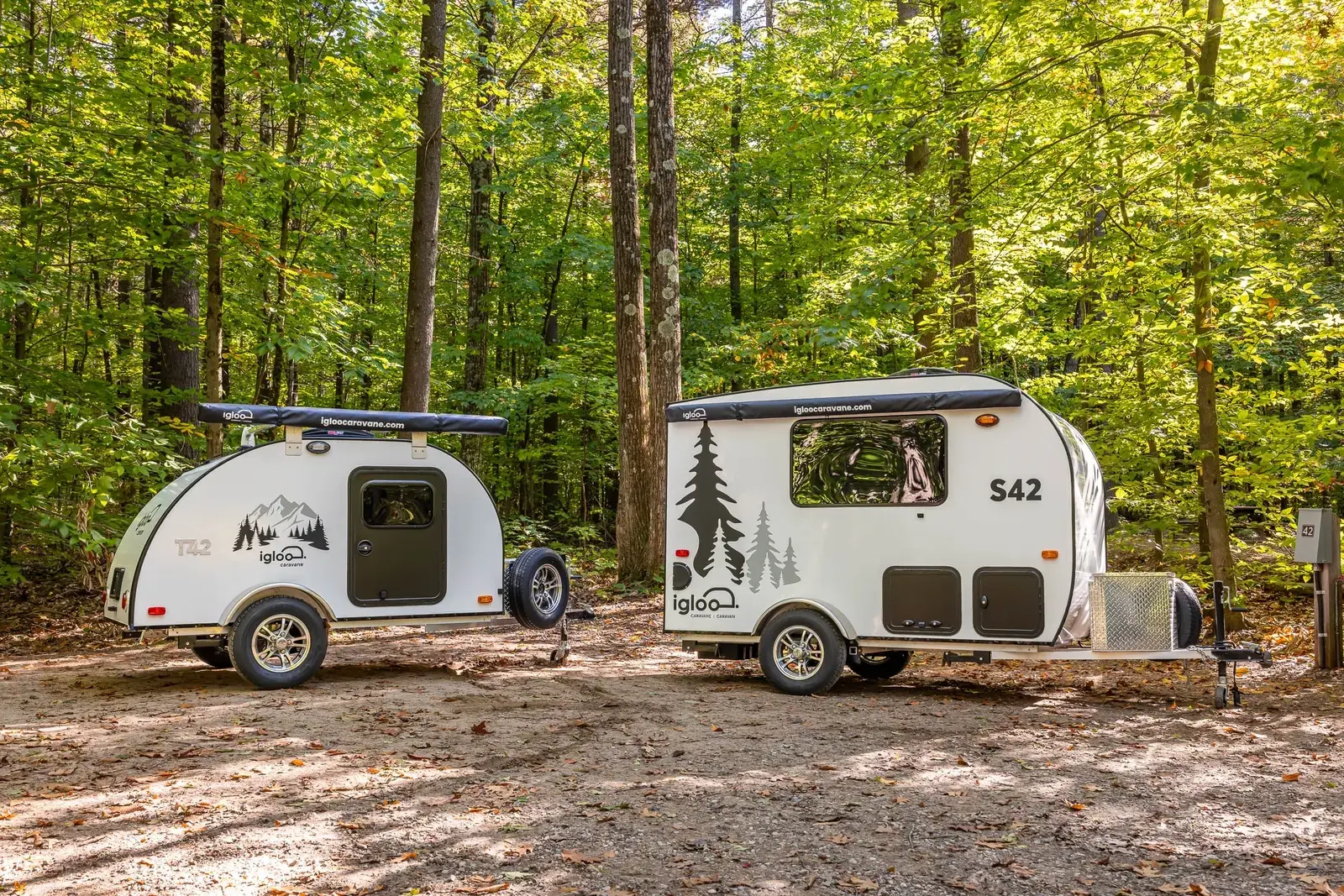
| Dry weight | 485 lb (220 kg) for the T42, 885 lb (405 kg) for the S42 | Much higher |
| Tow vehicle | Car, small SUV or crossover depending on the model | Full-size SUV or pickup truck in general |
| Trailer brakes | Rarely required | Often mandatory |
| Bathroom and tanks | None | Usually included |
| Structure | Aluminum and fibreglass, wood-free depending on the model | Wood common in walls and floor |
| Storage | Driveway or garage | Storage lot often needed |
Keep the vehicle you already own
A traditional trailer forces many buyers to trade their car for a full-size SUV or a pickup truck, with the higher price, insurance and fuel costs that come with it.
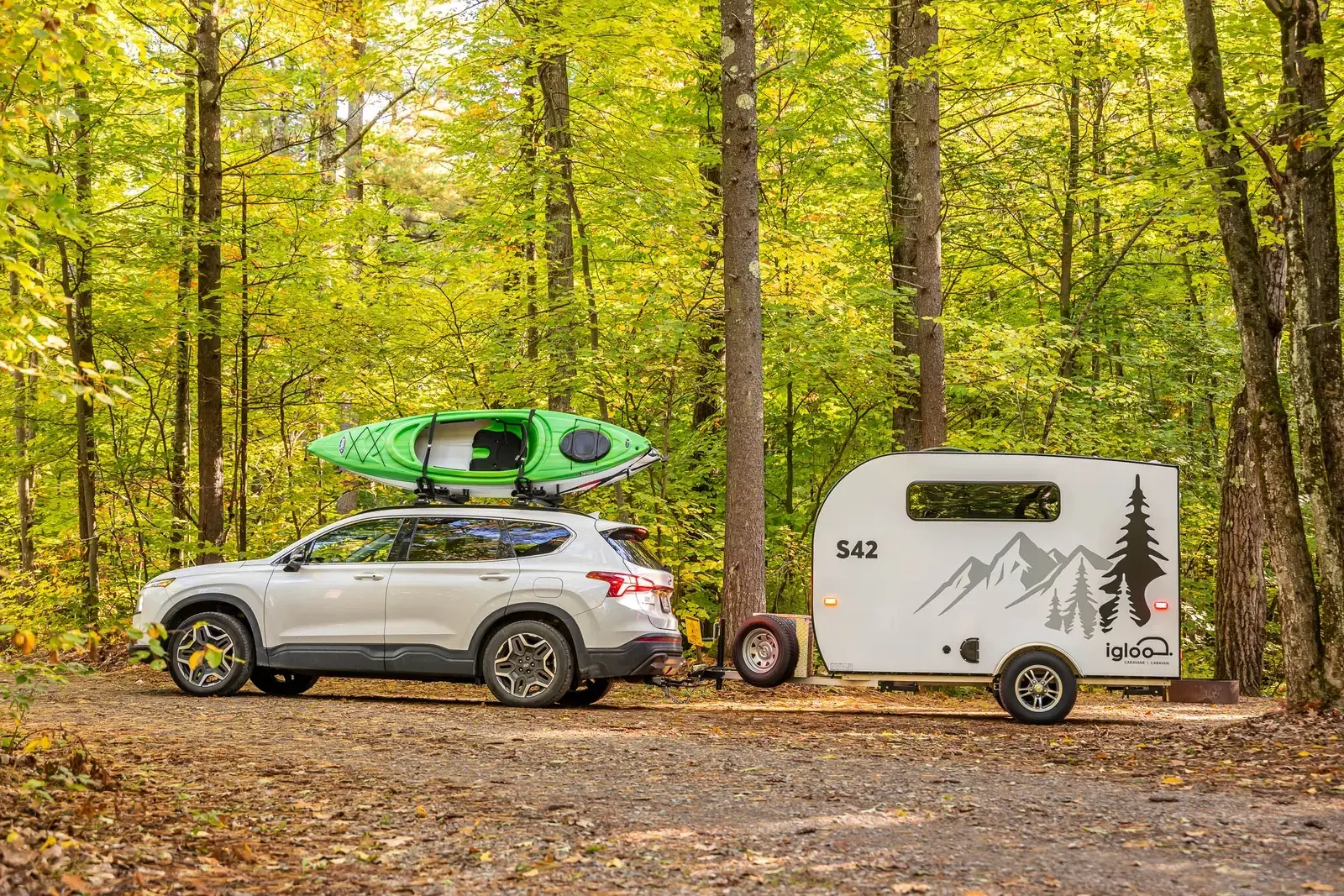
A mini-trailer stays compatible with many everyday vehicles. According to Protégez-Vous, small SUVs generally have a towing capacity of 680 kg (1,500 lb), which exceeds the loaded weight of most mini-trailers. The exact capacity is in the owner’s manual and must always be respected.
You also feel the savings at the pump or the charger. A trailer that’s lower and narrower than the vehicle offers less air resistance than a tall, wide trailer, which limits the increase in fuel consumption or the loss of range of an electric vehicle.
Towing rules that are easier to meet
The Highway Safety Code requires an independent braking system on each load-bearing wheel of a trailer whose mass, load included, reaches 1,300 kg or exceeds half the net mass of the vehicle towing it. The École nationale de police du Québec quick-reference guide details these requirements.
Many traditional trailers exceed this threshold and require electric brakes, a brake controller in the vehicle and regular maintenance of these components. An ultralight mini-trailer is generally exempt, as long as its loaded mass stays under half the vehicle’s net mass.
Width also works in the small format’s favour. Beyond 2 m, a trailer must carry additional lamps or reflectors. Mini-trailers 75 inches wide, or about 1.9 m, stay under that limit and follow the width of most vehicles, which reduces the need for mirror extensions.
Finally, CAA-Québec points out in its short guide to driving with a trailer that brake check areas become mandatory when the combination exceeds 3,000 kg. With a car and a mini-trailer, that’s rare.
Wondering whether your current vehicle is enough? An advisor can compare its specs with the weight of each model. Have your tow vehicle checked.
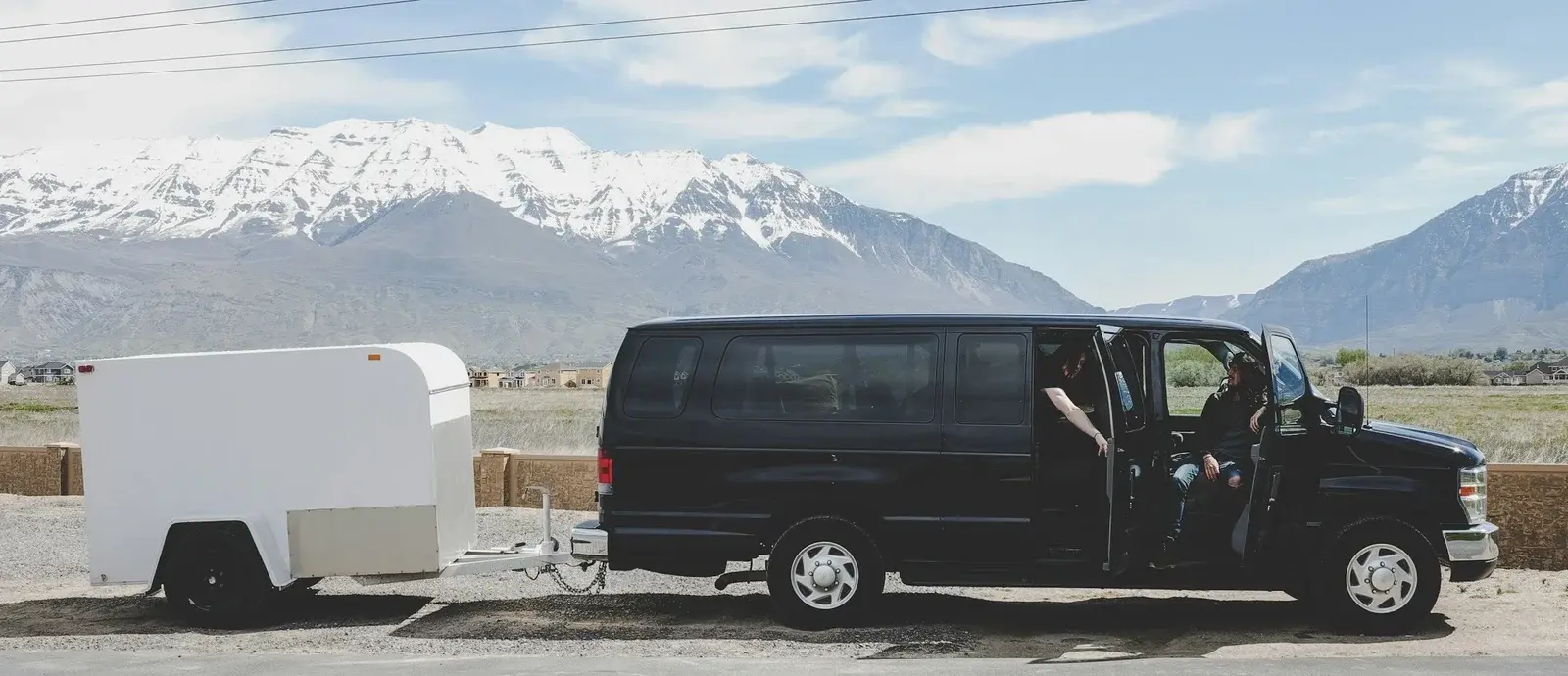
Less maintenance thanks to rot-proof materials
A traditional trailer often combines a wood frame, seals on a large roof and water systems to drain before winter. An undetected water leak can rot the wood for years before it becomes visible.
Mini-trailers built without wood eliminate that risk. A riveted aluminum frame, fibreglass-reinforced polymer walls and high-density polystyrene insulation don’t rot and need no paint or varnish. With no bathroom or grey water tank, there’s also no toilet, pump or drain to maintain.
The manufacturer’s blog explains this choice of materials in the article on insulation and fibreglass.
Easy storage at home
Storing a traditional trailer often means paying for a spot over the winter, for lack of room in the driveway. A 12- to 13-foot mini-trailer is much easier to store. At 69 inches tall, the T42 fits under many residential garage doors.
When the forecast calls for a nice weekend, you can get ready to leave in minutes, without fetching the trailer from a storage facility. Still, check your municipality’s rules on parking trailers in the front yard.
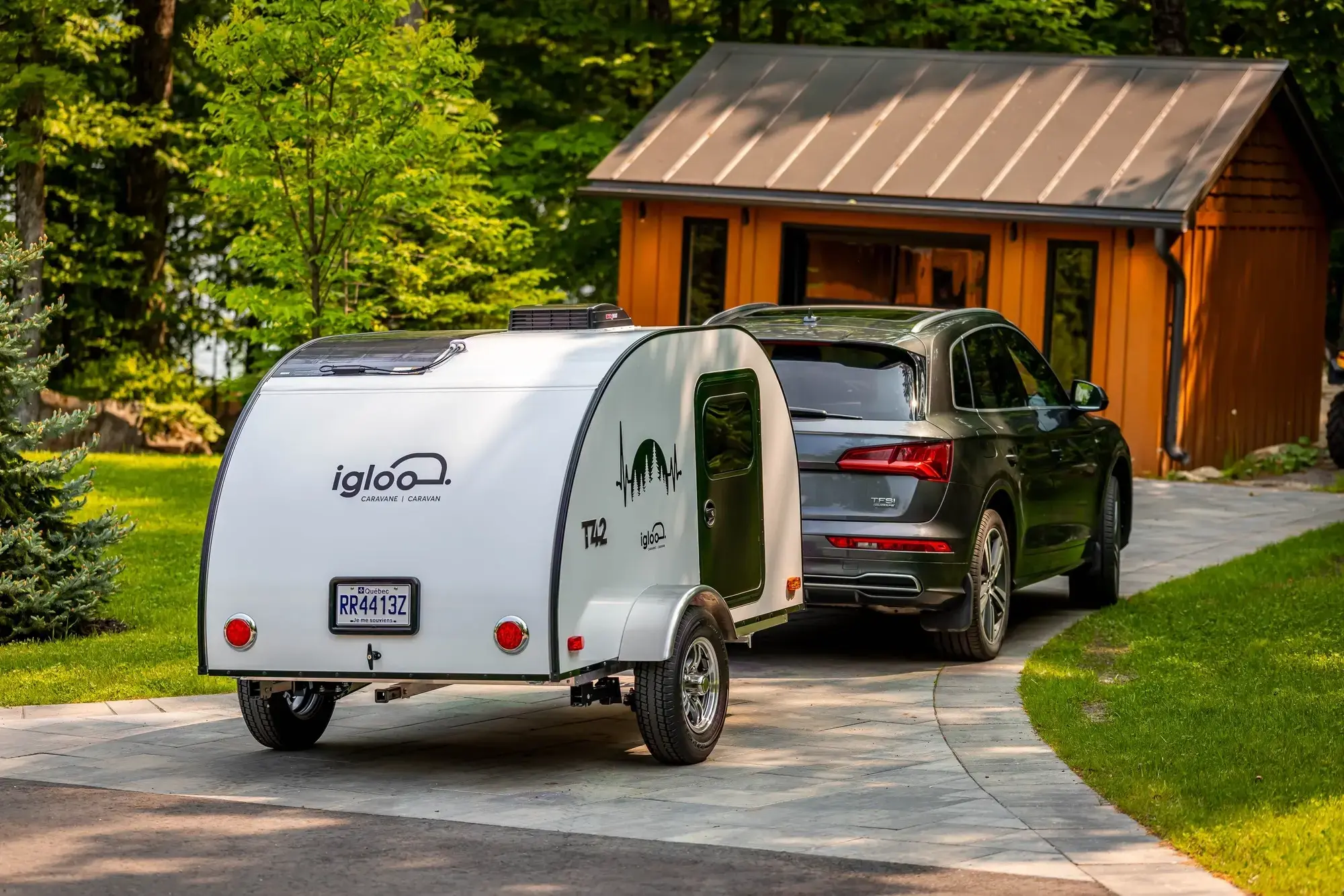
More freedom to choose where to camp
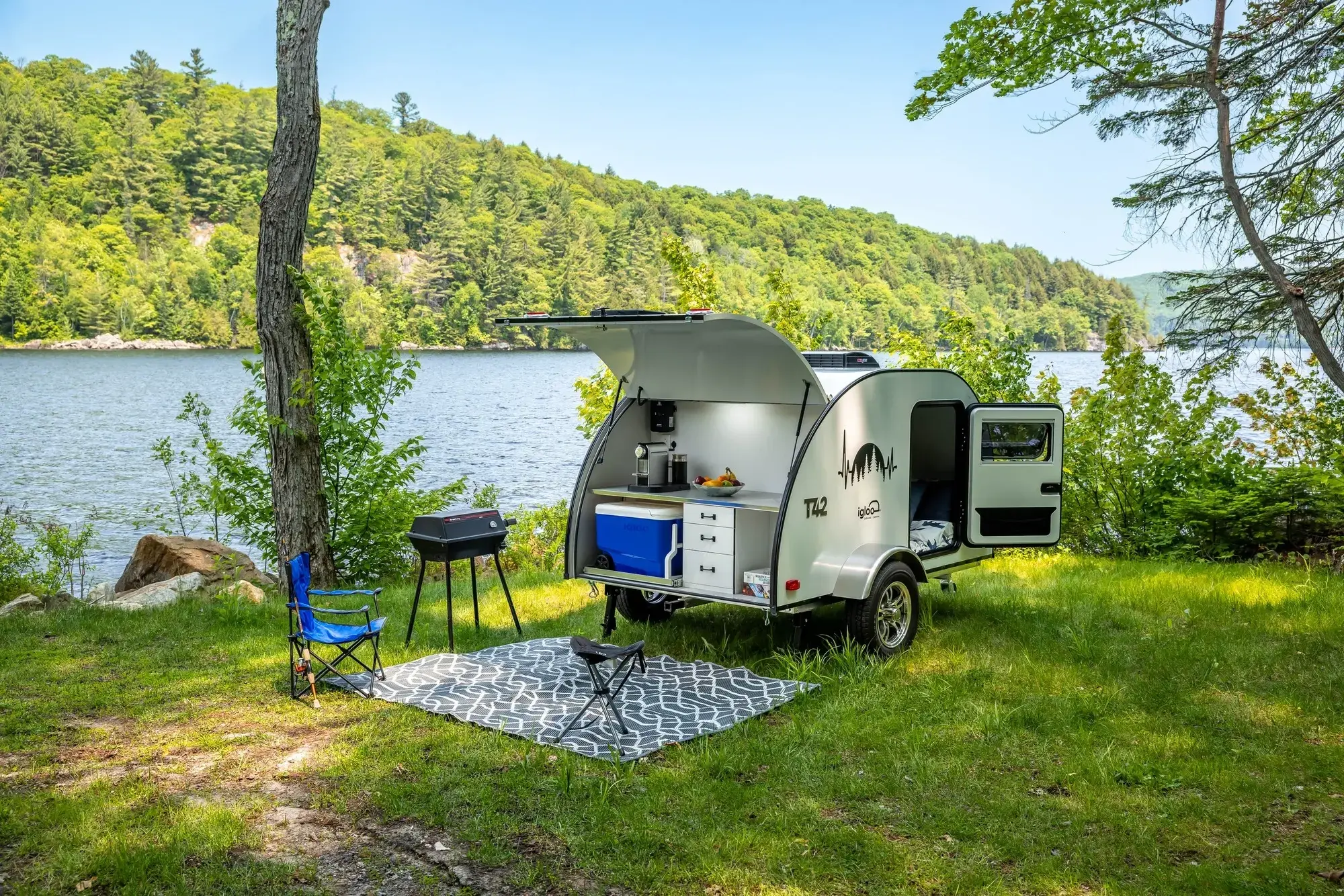
A short, lightweight trailer can be moved by hand on flat ground, backs easily between two trees and reaches narrow forest roads. Wooded sites, rustic campsites and lakefront lots become accessible, where a 25-foot trailer would stay in the parking lot. Waking up facing the water rather than your neighbour’s bumper is often the memory that stays with you after the trip.
Driving gets simpler too. A shorter, lighter combination stops faster, parks more easily at a convenience store and is less intimidating for drivers who have never towed a trailer. The article 5 reasons to choose an ultralight teardrop trailer for your adventures adds concrete examples of how it’s used.
If standing up inside matters to you, models like the S42 offer 68 inches of interior height while staying under 900 lb.
When a traditional trailer is still the better choice
A family of four or five, a couple spending the whole season on the same site or campers who insist on a private bathroom will find more comfort in a traditional trailer, provided they have the vehicle to tow it.
For everyone else, the ultralight mini-trailer wins: keep your vehicle, avoid trailer brakes, reduce maintenance and camp where big trailers can’t go. The two ultralight formats built in Quebec are featured on the mini-trailer models page.
Next summer could look different: less preparation, more back roads and nights by the water.
Ready to see up close what a compact format can offer? Book a visit or ask for information.
Frequently asked questions
What vehicle can tow an ultralight mini-trailer?
An ultralight mini-trailer can be towed by many compact cars, crossovers and small SUVs, depending on the towing capacity stated by the manufacturer. The trailer’s loaded weight must stay below that capacity. In Quebec, if that weight exceeds half the vehicle’s net mass, the trailer must have its own brakes. Also check the manufacturer’s tongue weight limit.
Does a mini-trailer cost less than a traditional trailer?
The purchase price varies by model, but the total cost is often lower with a mini-trailer. There’s no need to change vehicles, no trailer brakes to maintain, and storage can be at home. Fuel consumption also rises less than with a traditional trailer, thanks to the lower weight and lower profile.
Can you sleep comfortably in a mini-trailer?
Yes, a well-designed mini-trailer offers a real mattress, often the size of a double bed, or about 56 by 76 inches. Insulation in the floor, walls and roof limits condensation and keeps the temperature more stable at night. In midsummer, a 12 V roof fan and windows with screens keep the air moving without letting the bugs in.